
Short answer
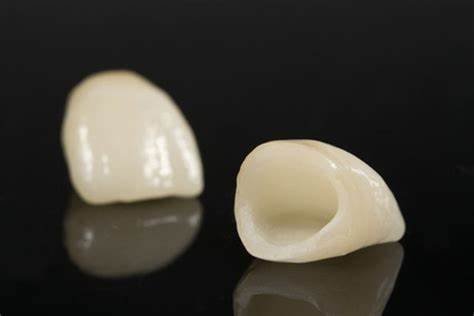
A porcelain veneer is a thin ceramic shell bonded mainly to the front surface of a tooth, designed to preserve as much enamel as possible. A full-coverage ceramic crown covers the entire clinical crown and is used when there is significant structural loss. Neither is better in absolute terms: the choice depends on the remaining enamel and dentin, the bite, gum health, and the patient's goals, and it is made after a clinical examination.
Porcelain veneers and ceramic crowns are restorative options used to improve the appearance and function of teeth affected by structural damage, wear, or aesthetic concerns. Although both can provide natural-looking results, they differ in the extent of tooth coverage, their clinical indications, and the amount of tooth preparation required.
Understanding these differences helps patients and clinicians select an approach that balances aesthetics, strength, function, and preservation of natural tooth structure.
1. Minimally Invasive Dentistry and the Biomimetic Approach
Contemporary restorative dentistry emphasizes the preservation of healthy tooth structure. The biomimetic approach seeks to reproduce, as closely as possible, the functional and mechanical properties of natural teeth (Boitelle, 2019).
Advances in ceramic materials and adhesive systems make it possible to restore selected teeth with partial restorations that require limited preparation. However, the amount of tooth reduction depends on the tooth's anatomy, color, position, extent of damage, and the type of restoration selected.
Minimally invasive dentistry is not simply about removing less tooth structure. It involves planning treatment that preserves healthy tissues without compromising restoration fit, function, or long-term performance.
2. Porcelain Veneers: Aesthetics and Enamel Preservation
Porcelain veneers are thin ceramic restorations bonded primarily to the front surfaces of teeth, particularly in the anterior region. They can modify tooth shape, proportions, and color while addressing certain aesthetic irregularities.
When may porcelain veneers be indicated?
- Discoloration that does not respond adequately to teeth whitening.
- Changes in tooth shape, size, or proportions.
- Limited fractures and wear affecting the incisal edges.
- Closure of selected spaces between teeth, such as diastemas.
- Correction of certain aesthetic irregularities affecting the smile.
Why is enamel important?
Bonding to enamel is one of the important factors influencing the clinical performance of porcelain veneers (El-Mowafy et al., 2018). When the preparation and restoration margins can be maintained predominantly within enamel, more predictable bonding conditions may be achieved. Extensive exposure of dentin can increase the complexity of the procedure and affect its prognosis.
Veneers are not suitable for every tooth. Extensive structural loss, certain fractures, large existing restorations, and some functional conditions may make other restorative options more appropriate.
3. Full-Coverage Ceramic Crowns: Structural Protection and Complete Coverage
Full-coverage ceramic crowns cover the external surfaces of the clinical crown of a tooth. They are used when a more extensive restoration is needed to restore the tooth's shape, function, and appearance.
Crowns may be indicated for teeth with extensive structural loss, fractures requiring protective coverage, or certain teeth following root canal treatment. The decision depends on the quantity and quality of the remaining tooth structure, tooth location, occlusal forces, and the feasibility of a more conservative restoration.
Why choose a crown instead of a veneer?
A crown provides more extensive structural coverage when the condition of the tooth requires it. However, it generally involves more tooth preparation than a conventional veneer.
Full coverage should therefore not automatically be considered superior. The appropriate option is the one that addresses the tooth's clinical and biomechanical needs with the least necessary intervention.
A 2024 laboratory study (Jurado et al., 2024) compared different lithium disilicate restoration designs for maxillary central incisors. Full crowns demonstrated greater fracture resistance than partial-coverage designs under the experimental conditions studied. These findings help compare restoration designs in the laboratory, but they should not be interpreted as a direct prediction of how long each treatment will last in patients.
Porcelain Veneer vs. Ceramic Crown: At a Glance
| Porcelain veneer | Full-coverage ceramic crown | |
|---|---|---|
| Coverage | Mainly the front surface of the tooth. | The external surfaces of the clinical crown. |
| Preparation | Less; aims to keep margins predominantly in enamel. | More than a conventional veneer. |
| Common indications | Discoloration, changes in shape or proportions, limited fractures, incisal wear, diastemas. | Extensive structural loss, fractures requiring protective coverage, certain root-canal-treated teeth. |
| Usual materials | Glass-ceramics, such as lithium disilicate. | Lithium disilicate or zirconia, depending on the case. |
| Key factor | Amount of enamel available for bonding. | Quantity and quality of remaining tooth structure and occlusal forces. |
4. Ceramic Materials and Digital Dentistry
Metal-free dental ceramics can reproduce optical characteristics of natural teeth, including translucency, brightness, and color depth. Material selection depends on aesthetic requirements, functional forces, restoration design, and the feasibility of adhesive bonding or cementation.
Lithium disilicate
Lithium disilicate is a glass-ceramic that combines aesthetic properties with mechanical strength suitable for a range of restorations. Depending on the clinical indication, it can be used for veneers, partial restorations, and crowns.
Its composition allows the internal surface to be conditioned using specific etching and silanization protocols, supporting adhesive bonding with resin cements when indicated.
Zirconia
Zirconia is a polycrystalline ceramic known for its mechanical properties. It is used for crowns and other restorations in which strength is an important consideration. Some modern formulations also offer optical properties that expand its use in visible areas of the mouth.
Its bonding protocol differs from that used for glass-ceramics. Surface treatment and the selection of a compatible primer, such as products containing the phosphate monomer MDP, depend on the material and the manufacturer's instructions (Blatz et al., 2016).
The behavior of porcelain-veneered zirconia crowns, in particular their chipping resistance and the thermal stresses they withstand, is an active area of research (Zhang et al., 2012; Shrestha et al., 2024; Shrestha et al., 2026).
Digital CAD/CAM workflow
Digital dentistry allows tooth anatomy to be captured using intraoral scanning. This information can then be used to design restorations through computer-aided design and computer-aided manufacturing (CAD/CAM) systems (Wang et al., 2026). It is the same digital dentistry approach used throughout the practice.
This workflow can support treatment planning, communication with the dental laboratory, and control of restoration fit. However, final accuracy depends on the entire process, including scanning, design, fabrication, materials, and clinical adjustment and cementation.
Digital technology is a tool for improving treatment control; it does not replace diagnosis or clinical judgment.
5. Bonding, Cementation, and Long-Term Performance
The success of a ceramic restoration depends on several factors, including case selection, preparation design, material quality, occlusal control, bonding or cementation technique, and subsequent maintenance.
Surface-conditioning protocols must be adapted to the composition of the ceramic.
- Glass-ceramics, such as lithium disilicate and feldspathic ceramics, may require hydrofluoric acid etching and silane application, according to the material and the recommended protocol.
- Zirconia requires a specific protocol that may include controlled airborne-particle abrasion with alumina and the use of a primer containing functional monomers such as MDP, when indicated.
These procedures are not interchangeable. Inappropriate surface conditioning may compromise the bond between the restoration and the cement.
Clinical evidence supports the use of ceramic restorations for appropriate indications (Blatz et al., 2018), although survival rates vary according to restoration type, material, technique, follow-up period, and patient characteristics. Long-term performance cannot be guaranteed by selecting a particular material or procedure alone.
Periodontal health, oral hygiene, bite management, and regular dental examinations also contribute to maintaining restorative outcomes.
6. How Is the Most Appropriate Treatment Selected?
Choosing between a porcelain veneer and a full-coverage ceramic crown requires an assessment of several factors:
- The quantity and quality of remaining tooth structure.
- The distribution of enamel and dentin.
- Pulpal health and previous dental treatment.
- Bite relationships, functional forces, and the presence of bruxism.
- Gingival and periodontal health.
- The patient's aesthetic expectations and functional needs.
In some cases, more conservative alternatives, such as teeth whitening or partial restorations, may also be considered.
The objective is to select the restoration that restores appearance and function while achieving an appropriate balance between strength, bonding, and preservation of natural tooth structure.
Considering veneers or crowns?
Every tooth has different needs. Planning at this practice starts with a clinical examination and the preservation of your healthy tissue — not with a one-size-fits-all solution.
Cosmetic Dentistry View All Treatments
Written by Isaac F. Meta, DDS, MS
DDS, University of Buenos Aires · MS in Oral Biology, The Ohio State University · U.S. Embassy-recommended dentist since 2008. Read his full background →
Frequently Asked Questions About Porcelain Veneers and Dental Crowns
The main difference is the extent of coverage and the amount of tooth structure that must be prepared. Porcelain veneers are thin ceramic restorations bonded primarily to the front surface of a tooth. They are generally used to improve tooth color, shape, size, or minor structural defects while preserving as much natural tooth structure as possible.
Dental crowns cover the entire visible portion of a tooth and are generally considered when more extensive structural restoration is needed.
The most appropriate option depends on the amount of remaining tooth structure, the condition of the enamel, bite forces, and the patient's functional and aesthetic needs.
Porcelain veneers do not necessarily damage teeth, but their placement may require removing a small amount of enamel. Because this preparation is generally irreversible, the decision should be based on a careful clinical assessment.
When appropriately planned, veneers can provide an effective aesthetic solution while preserving much of the natural tooth structure. However, excessive preparation, unsuitable case selection, or complications affecting the restoration may compromise the long-term health of the tooth.
No. Porcelain veneers are considered a long-term restorative treatment, but they do not last indefinitely. Their preparation usually involves irreversible changes to the enamel, meaning that the teeth may require future restorative treatment even if the original veneers eventually need replacement.
The lifespan of veneers varies according to the quality of the bonding procedure, the amount of remaining enamel, bite forces, oral hygiene, and other individual factors.
No lifespan can be guaranteed for every patient. Both porcelain veneers and ceramic crowns can provide many years of service, but their longevity varies according to the type of restoration, the materials used, the clinical technique, and the patient's oral health and habits.
Veneers may require repair or replacement if they fracture, become detached, or develop other complications. Crowns may also require replacement because of ceramic fracture, problems affecting the underlying tooth, or changes in the surrounding tissues.
Regular dental examinations and appropriate maintenance help monitor their condition and identify potential problems early.
Some patients experience temporary sensitivity after treatment, particularly when dentin has been exposed during preparation. The procedure is generally well tolerated, and local anesthesia may be used when tooth preparation is necessary.
The degree of discomfort varies according to the extent of the procedure and individual sensitivity. A conservative preparation and appropriate restorative techniques can help reduce the risk of postoperative sensitivity, although it cannot always be eliminated.
Suitable candidates generally have healthy teeth and gums, sufficient enamel for predictable bonding, and expectations that can be achieved with this type of restoration. Porcelain veneers may be appropriate for patients who want to correct certain changes in tooth color, shape, size, or alignment.
Active tooth decay, untreated periodontal disease, extensive loss of tooth structure, or significant bite problems may require treatment or further evaluation before veneers are considered.
A clinical examination is necessary to determine whether veneers are appropriate or whether another treatment would provide a more conservative or predictable result.
In some cases, but not always. Veneers can restore teeth that might otherwise be considered for more extensive treatment; however, veneers and crowns are not interchangeable in every clinical situation.
Veneers are generally more conservative but provide limited coverage. Crowns may be more appropriate when a tooth has extensive structural damage and requires greater coverage.
The decision depends on the amount and distribution of remaining tooth structure, the condition of the tooth, and its functional requirements.
Yes. Neither veneers nor crowns prevent tooth decay from developing in the natural tooth structure beneath or around a restoration.
The risk depends on factors such as oral hygiene, dietary habits, the condition of the restoration margins, and the patient's susceptibility to decay. Regular brushing, interdental cleaning, and dental examinations help maintain the health of the underlying tooth and surrounding tissues.
Dental ceramics generally have good color stability and are less susceptible to staining than many resin-based materials. However, the appearance of a restored smile can still change over time.
Natural teeth may become discolored, and plaque or surface deposits can accumulate on restorations. The condition of the polished or glazed ceramic surface and the quality of oral hygiene also influence appearance.
Professional evaluation can help determine whether discoloration is related to the restoration, the surrounding teeth, or surface deposits.
Possibly. Bruxism can increase the mechanical forces acting on teeth and restorations, potentially increasing the risk of ceramic fracture, wear, or debonding.
Its presence does not automatically rule out veneers, but it should be considered during treatment planning. Depending on the severity of the habit, the condition of the teeth, and the bite, a protective occlusal splint may be recommended.
The treatment plan should account for these forces rather than relying on the restorative material alone.
The most appropriate alternative depends on the problem being treated.
- Teeth whitening: May improve the color of natural teeth when discoloration is the main concern.
- Composite bonding: Can correct certain changes in tooth shape, minor fractures, and spaces using tooth-colored resin.
- Orthodontic treatment: May address tooth position and alignment without requiring restorative preparation.
- Ceramic crowns: May be indicated when a tooth requires more extensive structural coverage.
In some cases, no restorative treatment is necessary. A clinical assessment helps determine which option addresses the patient's concerns while preserving as much healthy tooth structure as possible.
Daily care is similar to that required for natural teeth. It includes brushing with fluoride toothpaste, cleaning between the teeth, and attending regular dental examinations.
Although ceramic materials are generally well tolerated by the surrounding tissues, the natural tooth margins and gums remain susceptible to disease. Patients who grind or clench their teeth may also need additional protection.
The recommended maintenance schedule depends on the patient's oral health, individual risk factors, and the type of restoration.
Generally not. Once the restoration is properly placed and the procedure is complete, it is generally possible to return to a normal diet.
It is advisable to avoid habits that place excessive force on the teeth, such as biting ice or hard objects, or using the teeth to open packaging. These precautions are also important for natural teeth.
Specific instructions depend on the procedure performed and each patient's clinical conditions.
Conclusion
Porcelain veneers and full-coverage ceramic crowns offer different options for restoring teeth with aesthetic and functional needs. Their success depends less on choosing a universal solution than on accurately identifying what each tooth requires.
A careful clinical assessment, appropriate material selection, and evidence-based restorative protocols help support individualized treatment planning that prioritizes tooth preservation and long-term stability.
At the practice of Dr. Isaac F. Meta in Palermo, Buenos Aires, treatment selection is guided by scientific evidence, individualized clinical assessment, and a commitment to preserving healthy dental tissues.
Content written and reviewed by Isaac F. Meta, DDS, MS. Last reviewed: October 26, 2026. It is for information only and does not replace an individual clinical evaluation.
Scientific References
- Blatz MB, Vonderheide M, Conejo J. The Effect of Resin Bonding on Long-Term Success of High-Strength Ceramics. Journal of Dental Research. 2018;97(2):132–139. — View article
- Blatz MB, Alvarez M, Sawyer K, Brindis M. How to Bond to Zirconia: The APC Concept. Compendium of Continuing Education in Dentistry. 2016;37(9):611–618.
- Boitelle P. Contemporary management of minimal invasive aesthetic treatment of dentition affected by erosion: case report. BMC Oral Health. 2019;19(1):116.
- El-Mowafy O, El-Aawar N, El-Mowafy N. Porcelain veneers: An update. Dental and Medical Problems. 2018;55(2):207–211.
- Jurado CA, Mekled S, Abuhammoud S, Azpiazu-Flores FX, Vegh D, Wang T, Morton D. Fracture resistance of partial and complete coverage veneers and ceramic crowns for maxillary central incisors. The Journal of Prosthetic Dentistry. 2024;132(2):420.e1–420.e6. — View article
- Shrestha R, Reddy N, Fredeen S, Zhang Y, Kim J. Functionally Graded Bi-material Interface for Porcelain Veneered Zirconia Dental Crowns: A Study Using Viscoelastic Finite Element Analysis. Dental Materials. 2024;40(8):1267–1281.
- Shrestha R, Fredeen S, Reddy N, Alves LMM, Zhang Y, Kim J. Thermal Stresses in Porcelain Veneered Lithium Disilicate and Zirconia Dental Crowns: Comparative Analysis Using a Validated Viscoelastic Finite Element Model. Journal of the Mechanical Behavior of Biomedical Materials. 2026;163:106895.
- Wang YC, Zhang HW, Liu WW, Chen AD, Zhou HB. A state-of-the-art review on chairside CAD/CAM ceramic materials in restorative dentistry. Biomaterials Advances. 2026;185:214883. — View article
- Zhang Y, Chai H, Lee JJW, Lawn BR. Chipping Resistance of Graded Zirconia Ceramics for Dental Crowns. Journal of Dental Research. 2012;91(3):311–315.